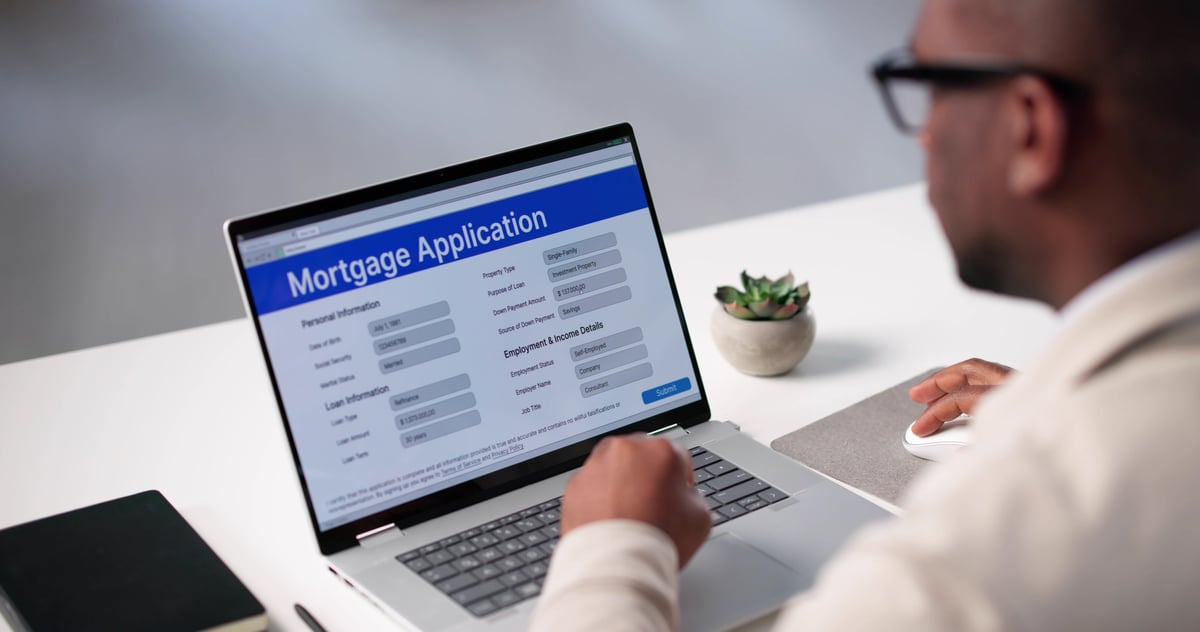
An underwriter is the person (or automated system) who
evaluates your loan application for risk. Their job:
determine whether you're likely to repay the loan based on the "Three
Cs" — Credit (history and score),
Capacity (income and DTI), and
Collateral (the property value). Underwriting happens
after your initial application and before final approval.
Automated vs Manual Underwriting
Automated Underwriting (AUS)
Computer algorithm evaluates your application. Fannie Mae: Desktop
Underwriter (DU). Freddie Mac: Loan Product Advisor (LPA). FHA:
TOTAL Scorecard. Most loans go through AUS first. If you get
"Approved/Eligible," underwriting is mostly just verifying
documents. Takes minutes, not days. The majority of loans are
approved through AUS.
Manual Underwriting
A human underwriter reviews everything manually. Required when AUS
returns "Refer" (not approved) or when your application has
non-traditional elements. Takes longer — days to weeks. Common for:
self-employed borrowers, non-traditional credit, borderline
applications, and portfolio loans. More stringent — expect more
documentation requests.
The 4 Areas Underwriters Scrutinize
1. Income Verification.
Underwriters verify that your income is stable, sufficient, and likely
to continue. They check: 2-year employment history, consistency of
income, bonus/overtime/commission calculations (typically averaged
over 2 years), and for self-employed: profit vs gross revenue. Gaps in
employment need explanation.
2. Asset Verification.
They trace all funds for your down payment and closing costs.
"Sourcing" means showing where every dollar came from. Large deposits
(typically over 50% of monthly income) must be explained. Gift funds
need a gift letter and proof of donor's ability to give. Cash under
the mattress is not acceptable — it must be seasoned (in your account
for 60+ days).
3. Credit Analysis.
Beyond your score: payment history (any lates?), collection accounts,
charge-offs, bankruptcies/foreclosures (waiting periods), credit
inquiries, and credit utilization. They look for patterns, not just
the score.
4. Property Analysis.
The appraisal confirms the home's value. The title search confirms
clear ownership. Flood certification checks flood zone status. If the
appraisal comes in low or title issues surface, the underwriter may
require resolution before approving.
Underwriting Conditions & Timelines
"Conditions" are items the underwriter needs before
giving final approval. Common conditions: letter of explanation for a
credit inquiry, updated pay stub, bank statement showing a deposit
source, gift letter, proof of homeowners insurance, or clarification on
employment gap. Most loans receive 3-10 conditions. Underwriting
typically takes 3-14 business days. Responding quickly
to condition requests is the #1 way to speed up the process.