Manufactured Homes

Manufactured Home Loans:
Financing for Factory-Built Homes

Manufactured and mobile homes can be financed — but the rules are different from site-built homes. Learn about FHA Title I/Title II, VA, and conventional manufactured home loans, foundation requirements, and how to qualify.

Explore Manufactured Home Financing

Free • Confidential • No Obligation

More Options Than You Think

Financing a Manufactured Home Is Absolutely Possible

From FHA and VA to conventional programs, there are real mortgage options for factory-built homes. The key is knowing which loan program fits your home, your land, and your goals.

0-3.5% Down

VA offers 0% down on manufactured homes; FHA programs start at 3.5%.

Home + Land Options

FHA Title II, VA, and conventional programs can finance the home and land together.

HUD-Code Homes

Homes built after June 15, 1976 to HUD code qualify for standard mortgage programs.

Low Chattel Rates

Even when land isn't included, a chattel loan keeps you on track — home financed like a car.
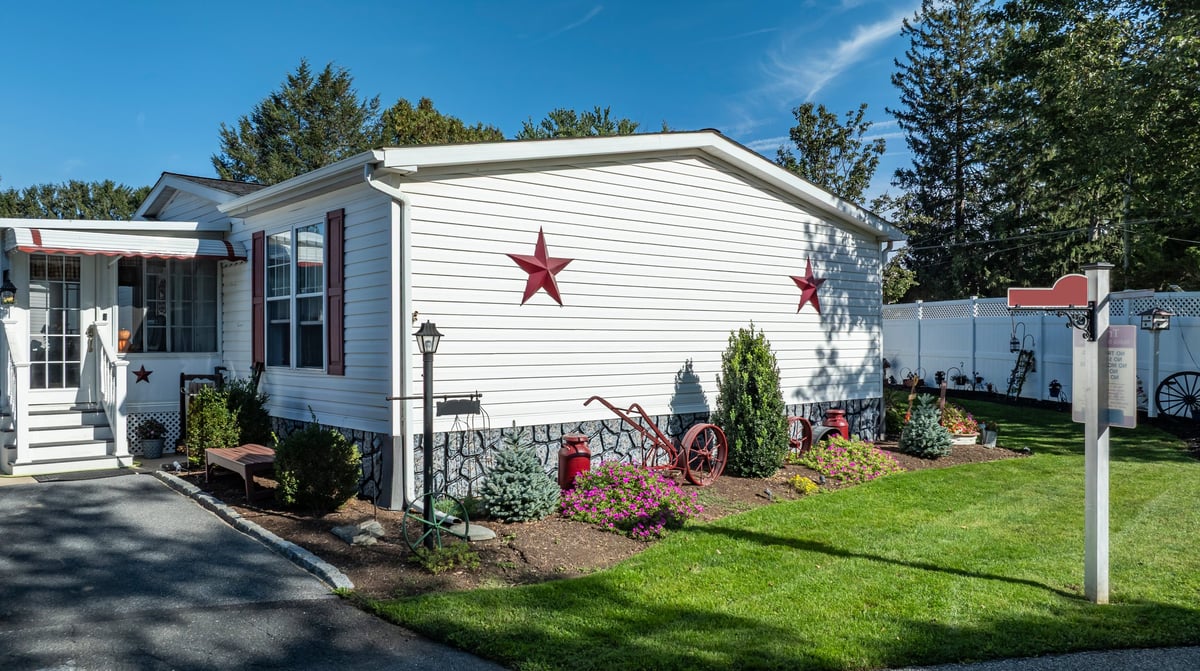
A house standing in a suburban area surrounded by a well-kept garden with red stars exterior bright under the sun
Your Financing Path

How We Find the Right Loan For Your Manufactured Home

The right program depends on your home's age and foundation, whether you own the land, and your down payment. We sort through the options so you get the best financing.

1

Evaluate Your Home & Land

We check your home's age, HUD tags, foundation, and whether you own the land to see which programs qualify.

2

Compare Loan Programs

We weigh FHA Title I/II, VA, conventional, and chattel loans to find your lowest-cost, most flexible option.

3

Meet Foundation & HUD Requirements

We guide you through permanent foundations and HUD compliance so the home qualifies for the best rates.

4

Lock In Your Best Rate

We help you get pre-approved and lock a strong rate — so you can buy your home with confidence.

Explore Your Financing Options

Manufactured Home Financing Options

Manufactured homes (built after June 15, 1976, to HUD code) and mobile homes (built before 1976) have different financing rules than site-built homes. Key distinction: manufactured = HUD code; modular = local building code (modular homes qualify for standard mortgages).

Loan Programs for Manufactured Homes

Program Key Features Down Payment
FHA Title I For manufactured home only (not land). Max loan: $148,909. Home must be primary residence. Can finance home + lot separately. 3.5%
FHA Title II (203b) For manufactured home + land together. Home must be on permanent foundation. Standard FHA limits apply. 3.5%
VA Manufactured Home For veterans. Home must be on permanent foundation and affixed to land. Max term 25 years for home+lot. 20 years for home only. 0%
Conventional (Fannie Mae MH Advantage) For manufactured homes meeting specific construction standards (site-built-like features: permanent foundation, pitched roof, etc.). Competitive rates. 3-5%
Chattel Loan Personal property loan — home treated like a car. Higher rates (8-12%), shorter terms (15-20 yrs). Used when home isn't on owned land. 5-20%

Manufactured Home Requirements for Mortgage Approval

  • Built after June 15, 1976 — must meet HUD Manufactured Home Construction and Safety Standards (HUD Code). Pre-1976 "mobile homes" are extremely difficult to finance — typically limited to chattel loans or cash.
  • Permanent foundation — required for FHA Title II, VA, and conventional loans. The home must be permanently affixed to land you own.
  • Minimum size: 400+ square feet (FHA), double-wide strongly preferred by most lenders.
  • Land ownership: You must own the land (for most programs) or have a long-term lease in an approved manufactured home community.
  • HUD tags & data plate: Both must be present and legible. Missing tags make the home unfinanceable through standard programs.
DEFAULT & YOUR OPTIONS

What Happens If a Manufactured-Home Loan Goes Into Default?

Manufactured housing is financed in different ways, and how a default is handled depends heavily on whether the home is treated as personal property or as real property. The distinction can change the process significantly.

Chattel / Personal-Property Loan

The home may be financed separately from the land, and may be titled as personal property rather than real estate.

In these situations, default may involve repossession procedures rather than a traditional real-property mortgage foreclosure. The procedures, notices, and timelines can differ from mortgage foreclosure entirely.

Real-Property Mortgage

Where the manufactured home and the land are legally treated and financed as real property, the loan is generally secured by a mortgage or deed of trust.

In these cases, mortgage foreclosure procedures may apply, similar to a site-built home. The home and land are treated as a single real-property collateral package.

Mixed Situations

Many manufactured-home arrangements fall somewhere in between — the home may be titled one way while the land is owned or leased differently.

Title status, land ownership, whether the home has been affixed to the land (fixture status), the loan documents, and state law all matter. There is no single universal rule.

Homeowner Checklist

If you're facing a default on a manufactured-home loan, clarifying these points can help you understand which process applies.

  • Determine whether the land is owned or leased
  • Identify the title status of the home (personal vs. real property)
  • Review the note and any security agreement
  • Review the mortgage or deed of trust, if any
  • Preserve all notices you receive
  • Verify whether the proceeding concerns repossession or real-property foreclosure

Dream Financial Management is a financial consulting company. We do not give legal advice about title classification, and we encourage you to consult a qualified professional about your specific situation.

Manufactured Home FAQs

Manufactured vs modular — what's the difference for financing?

Can I finance a manufactured home in a park (leased land)?

Related Resources